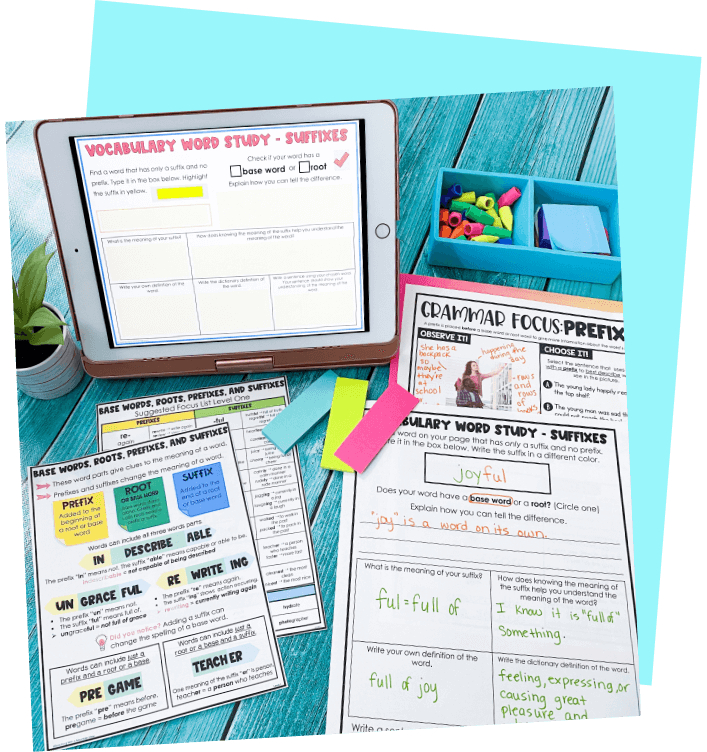



It's here! It's here! Time for a Teacher Appreciation Sale.
Need Task Cards? I've got them! Need Math Projects? Yep, I've got those, too! Error Analysis? Yes, ma'am! Freebies? Of course!
Come on over and join the fun!
Teaching With a Mountain View
Inspiration With a View
Monday, May 6, 2013
Sunday, May 5, 2013
Mother's Day Freebie & Teacher Appreciation!
Happy Teacher Appreciation Week! I hope that all of your students treat you well this week, and I also hope that your PTA has something special planned for you. Our celebrations look to be rather caloric, but I'm still very excited about them!
First of all, if you are interested in my weekend task card organization project, hop on over to Task Card Corner and check it out. I'm very excited about it.
On to the meat of the post! I wanted to share a quick little Mother's Day activity I have been doing with my students for years (keep reading...it's FREE!). I can't remember the origin of this, but I am almost certain my cooperating teacher helped me do it the first year, and my original document is one I made myself. I can't find any trace of it on the internet anywhere, so I thought I would share it here. If you know the origin, please let me know!
The older grades (in my school) usually forget about Mother's Day, but I always make sure we do a little something. In comes "A Few of My Favorite Things." I begin by having my kids listen to the original song (Here's a good link), and then they brainstorm a list of THEIR favorite things about their moms. After that, I show them the planning sheet and we talk about the pattern of syllables in the song. They go to work writing their own songs about their moms. The students LOVE this!
When they are done, they do a final copy on one of the provided sheets (or they can make their own), then cut it out and glue it to a piece of construction paper. Surrounding the song, they write all of their MOM'S favorite things. This usually only takes 1-2 hours, and the students are so proud of their final product.
I don't have any examples of my own students since they all ended up with moms and we haven't done ours yet this year (and I prettied it up for all of you this year!)
Click here to download the templates here for free.
I'm sure you have heard by now, but on TUESDAY & WEDNESDAY, TpT will be having a site-wide sale (their only sale until Back to School). Of course, I'll be discounting everything in my store 20% plus TpT adds on an extra 10% off, for a total savings of 28%!
My shopping cart is bursting at the edges. At first, I thought I wouldn't be buying much other than clip art, but then I remembered that by about the 1st of July, I start to get that itch...you know, the itch to start planning/organization/crafting for the new school year. So I figure if I buy all my goodies now, I will have something productive to prepare when that time comes around. (I sell a LOT of task cards, and task cards are so fun to cut over the summer, right?) :-)
I hope you will partake in the fun of the sale. It should be a great 2 days!
First of all, if you are interested in my weekend task card organization project, hop on over to Task Card Corner and check it out. I'm very excited about it.
On to the meat of the post! I wanted to share a quick little Mother's Day activity I have been doing with my students for years (keep reading...it's FREE!). I can't remember the origin of this, but I am almost certain my cooperating teacher helped me do it the first year, and my original document is one I made myself. I can't find any trace of it on the internet anywhere, so I thought I would share it here. If you know the origin, please let me know!
![]() |
| Mother's Day Upper Grades Activity |
When they are done, they do a final copy on one of the provided sheets (or they can make their own), then cut it out and glue it to a piece of construction paper. Surrounding the song, they write all of their MOM'S favorite things. This usually only takes 1-2 hours, and the students are so proud of their final product.
![]() |
| An example I made for my mom. Lots of inside jokes included here, but my students will get the point that is should be personalized to their own mom. :) |
Click here to download the templates here for free.
![]() |
| Thanks to Beth at Zip-A-Dee-Do-Dah designs for this adorable sign! |
My shopping cart is bursting at the edges. At first, I thought I wouldn't be buying much other than clip art, but then I remembered that by about the 1st of July, I start to get that itch...you know, the itch to start planning/organization/crafting for the new school year. So I figure if I buy all my goodies now, I will have something productive to prepare when that time comes around. (I sell a LOT of task cards, and task cards are so fun to cut over the summer, right?) :-)
I hope you will partake in the fun of the sale. It should be a great 2 days!
Monday, April 29, 2013
End of the Year 3 Words Activity
I wanted to share a little activity our school does at the end of each year-- as a class, we all watch one of Good Morning America's 3 Words Videos (I always screen them and make sure I find an appropriate one for the kids to watch). Here is a funny one that always makes the kids smile... (and it's funny because it's about the BEGINNING of the school year)
After we watch a few examples, the kids come up with their own three words about their school year. Sometimes, I get really incredible 3 words, and then there are always a few "Best Year Ever!" and "Best Teacher Ever!" thrown in there. We get creative in how we display them, then we take pictures of them all. On the last day of school, our entire school gets together and watches all of the three words everyone came up with. The kids LOVE it!
Want more end of the year ideas for your classroom? Check out my End of the Year Pinterest Board!
After we watch a few examples, the kids come up with their own three words about their school year. Sometimes, I get really incredible 3 words, and then there are always a few "Best Year Ever!" and "Best Teacher Ever!" thrown in there. We get creative in how we display them, then we take pictures of them all. On the last day of school, our entire school gets together and watches all of the three words everyone came up with. The kids LOVE it!
![]() |
| Here was our whole class 3 Words one year. I had to crop the kids out, but it's a picture of our whole class, and it reads "Classmates become friends!" They came up with it, and it melted my heart. |
![]() |
| A sampling of our three words from last year's third grade class! |
Sunday, April 28, 2013
Top 10 Tips for Building Fluent Readers + Link Up!
We have all heard about the shift that happens, usually
between second and third grade, when students (should) go from learning to read to
reading to learn. Unfortunately, for
some students, their ability to read to learn is stifled by their inability to
read fluently. Even for those kids who
can read at an average pace, the faster and more accurately they can read and decode, the more effectively
they can comprehend.
When I taught third grade, and now as an interventionist,
the importance of fluency is empathized more than ever (and has definitely met some critics). I know that fluency is NOT the end-all, be-all, but a lot of research proves that it is important, and a lot of schools are trending toward fluency being a high priority. I have compiled a list of some of the
resources and strategies I have used when teaching in the regular education
classroom and as an interventionist. I
hope they can help you in some way. This
isn’t a blog post about what fluency IS, but about ways to improve it. Some of the ideas are FREE, and a few of them
are links to specific paid resources that I have tested in my classroom. I get nothing in return for posting about
these (my Mountain View state—Colorado—doesn’t allow Amazon Affiliates), so
they are simply products that I have used and believe in.
**This is a long post, so be sure not to miss the blogs that
will link up at the bottom with more great fluency ideas!**
1.
Have students read EVERYTHING out loud
I know what you’re thinking—this is
obvious. Yes, to some this may be
inherent. But, when I say everything, I
mean EVERYTHING—do you have a student read your morning message out loud, or do
you do it? Do you have a student read
the daily math problems out loud, or do you do it? Do you have a student read the directions for
an assignment out loud, or do you do it?
If you have been the one reading everything, STOP! For kids in grades 2 and up, they should be able
to read all of the directions, all of the math problems, everything. I know this sounds silly, but consider all
the reading you do to your students in a day while explaining something—or all
the reading that they may do in their head when you could have a student
reading it out loud. If a student only
read one extra sentence out loud each day by implementing this, that’s an extra
185 sentences read out loud over the course of a year. Worth it to me! (Counter Argument: Some
teachers mention that the students need to hear examples of fluent reading, and
yes, yes, yes I agree! That is what read
aloud time is for.)
2.
Super Speed Fluency
Have you discovered the Super Speed games
from Whole Brain Teaching? They have
them for a variety of different fluency (math and reading) skills, but the one
I love for reading fluency is Super
Speed 1,000. It’s a free download,
and it’s AMAZING! The kids practice the
1,000 most common sight words in a lightning fast game that takes three minutes
a day once the students understand how to play.
I will warn you—this can get loud, and loud is uncomfortable for
me! I like a serenely peaceful classroom…I
had an administrator walk in one day during Super Speed time, and I felt that
pit in my stomach—it was so loud, she would think I wasn’t managing my
classroom. As she walked around and saw
the enthusiasm of these kids reading their sight words, she praised the program
and then shared the link with the staff at the next weekly meeting. I have used Super Speed for second through
fifth graders, in every setting you can imagine. I highly recommend it!
3.
Audacity
Audacity
is a free voice recording software you
can download onto just about any computer (You could use any voice recording
software for this). Every week, one of
our fluency centers is Audacity. The
students practice a passage out of their current novel three times. Then, they record themselves reading it out
loud on Audacity. They listen back,
while reading the page in their head.
Then, they take notes on what they noticed about their reading (How was
their prosody? Attention to punctuation?
Did the dialogue sound authentic?). They
find 2 glows and a grow, and then on their next read, they focus on their “grow”
area. They record it again and listen
back. The process continues until they
are ready to submit it to me. This year,
I have them save it to a public folder that I can access, but in years past,
they have posted it to a classroom wiki to keep track of their growth—and parents
can log in and listen to their reading from the wiki, too.
4.
Poetry Stations
Poetry is one of my favorite fluency
practices, and the students always feel the same way! There are so many wonderful ideas out there
about how to use poems to boost fluency, so I won’t delve into that too
much. Rather, I’ll share how we keep
track of our poems.
At a garage sale a few years ago, I picked
up a class set of My Dog Does My Homework, an anthology of fun kid
poems. I can’t find a place to buy it,
but you could do the same activity with any anthology of
poems or a website like www.poetry4kids.com
. Each students has a copy of the
anthology and the goal is to read through the book—five times. We focus on one or two poems each week, where
I model great fluency, then we do some choral reading as a class, then they
work on them during their literacy stations.
As they read the poems (in any order they want to), they mark down the
date that they read it. They can read
the same poem five times in one day, or they can read five different poems on
one day.
5.
“You Read to Me, I’ll Read to You”
Okay, I know I keep saying things like, “this
is my favorite” or “it’s amazing,” but this one is a favorite and amazing and
fun and engaging and etc. etc. etc. These are books that are similar to a Reader’s Theatre, but they are shorter, rhymed and
rhythmic, giving each student a part to read, and then a common part that they
must read together. Again, a favorite
when I put them into a reading fluency station, and really not a bad
price. There are five of them, and they
will last you an entire year. You can
get them on Amazon
for $6 each. So worth it!
6.
Task Cards
During my intervention groups in 3rd
and 4th grade, I discovered a great need for fluency practice that
was more than just words or phrases and less than paragraph passages (although both are absolutely important). So, I began creating fluency task cards. They include short (2-3 sentences) statements
for students to focus on fluency. The
first set I made is a general set—includes reading dialogue, appositives,
punctuation, etc. The second set I made
focuses on prefixes and suffixes (once kids can unlock the “code” of prefixes
and suffixes, they make oral reading fluency growth rapidly). I am working on several different sets that
focus on specific areas that students need practice in, but these two sets have
lasted us 3 weeks so far. The students
beg to do these in small group, and they even love to rate their fluency each
time they read them.
7.
Six Minute Solution or Repeated Readings
Six Minute
Solution is a program to help students improve their reading fluency in 6
minutes a day. It’s expensive, but it
works. This program really focuses on
reading rate, as opposed to prosody, but I have seen immense benefit. The premise is this: the students read a
leveled passage for one minute, three times daily. They have a partner who reads along with
them, recording errors and stopping points.
The partner also reads three times (they flip flop who is reading each
turn), hence the 6 minutes. In reality,
it takes about 8-10 minutes to have them read and mark their graphs, so I
typically only did it three days a week.
If you can’t afford the Six Minute
Solution, there are a lot of leveled CBMs on TpT that are more affordable (Think: Jen Jones at Hello Literacy). Whip up some graphs so that students can
track their progress, them implement it.
Here is what I have adapted implementation to look like… this is NOT
exactly what the Solution prescribes, but it is what worked for me in a
whole-class setting.
Day 1 of new passage ONLY:
2 Minutes: Silent Read Passage & Confer
with partner about unfamiliar words
1 Minute: Cold Read (Students are all
reading their passage orally and record their cold read time on a graph)
Every Day:
1 Minute: One partner reads orally while
the other partner reads along silently and marks mistakes and stopping
point. After the one minute mark, the
reader marks the rate on the graph.
1 Minute: Second partner reads orally while
the other partner reads along silently and marks mistakes and stopping
point. Mark rate on graph.
Repeat three times, for a total of 6
readings between partners
8.
Florida Center For Reading Research
I love the FCRR! Free, research-based, easy prep, and easy for
differentiation—there are also many resources that are perfect for tier 1 and
tier 2 reading intervention groups. At the beginning of the year, I was using second & third grade materials for my fourth graders in intervention and for my third graders in TAG. As
an interventionist, I created binders full of all the resources so that
teachers could easily grab them and copy them as needed. I was shocked at how many teachers had never
heard of the site, and I am so glad these binders (which admittedly took hours
to put together) have gotten a great deal of use out of them!
![]() |
| We organized all of the files into binders by grade level. |
9.
Reader’s Theatre
Need I say more? I feel like so much has
been said about Reader’s Theatre in the teaching world that I would be remiss
to not mention it, but I also feel like I don’t have anything truly new and revolutionary to add to it. If you haven't used Reader's Theatre, do it! It is THE perfect end of the year activity!
10.
Morning Meeting Book Talks
In the intermediate grades, morning meeting
looks a little bit different than in the primary grades. Our morning messages are different, our
greetings are different, our activities are different. One activity I implemented was book talks. Every students signed up one a week (give or
take) to do a one minute book talk and to read a one minute passage out of the
book. They practiced it at home and then
presented in the classroom. If a student
was reading an exceptionally long book, they might end up presenting on it two
or three times, which was fine. My kids
really loved this, and it encouraged them to always have a book they were
reading outside of the classroom!
Well, that’s it! I hope that you can implement some of these
ideas into your classroom tomorrow, and maybe you will implement some at the
beginning of next year. Be sure to check
out the links below for more blog posts on fluency!
*If you have a blog post that gives a great
tip or trick for increasing oral reading fluency (paid product mentions ok, but no direct product links, please), I
invite you to link up your blog post here.*
Wednesday, April 24, 2013
Dividing Fractions Anchor Chart, Game Freebie, and Math Journal
We tackled dividing fractions this week! I was a little bit apprehensive about it since these are wee little fourth graders working on this tough stuff, but they did GREAT! Although I follow the CCSS, I thought it was a little silly that they don't include dividing a fraction by a fraction at fifth grade since it's easy enough to add in once they know how to divide a whole number by a fraction and a fraction by a whole number, so we just did it all. And we tossed in mixed numbers while they were at it. Rigor!
We started with a math journal entry about dividing fractions with visual models. Funny story-- I spent HOURS making a pretty study guide for this, and my sweet husband just didn't understand it. He (like most of us) is old-fashioned, and we don't feel the need to understand the "why" behind most of these math concepts. But my kids rocked this! It clicked for them right away. Thank goodness! You can see the math journal page I created with them in this picture. I don't really emphasize the visual models, but I think it helps them to see why dividing a whole number by a fraction gives them a larger number and vice-versa.
Then we got down to the nitty gritty. We introduced reciprocals first using our Funny & Fabulous Fraction Stories book, and then we did a step-by-step dividing fractions anchor chart. You can see that we included the directions for dividing fractions by fractions, dividing whole numbers by fractions, and dividing fractions by whole numbers.
At the bottom, we noted the "Keep-Change-Flip" shortcut. They copied this in their math journal as well. We have already referenced it several times. (For instance, a student comes and asks me why they got an answer wrong, and it's easy to say, "what step did you forget?" Problem solves 99% of the time.)
The second day, we worked on some dividing fractions games. I'm linking up with the fabulous Laura Candler and her Math Game Round-Up. Check it out for more FREE math game ideas from numerous teacher bloggers!
There are two versions of the dividing fractions game--I had half of my group working on one while they other half worked on the other. One uses pattern blocks, and the other uses dice-in-dice, but could easily be adapted to use with several regular dice.
Breaking Up the Blocks was great because it helped students review fractional parts and making fractions. They choose 2 blocks, then use the fractional parts (i.e. a triangle is 1/6 of a whole hexagon) to form equations. Then, they choose 5 blocks, creating a mixed number (or whole number) and a fraction and divide them. The kids LOVED it. Definitely better than an ordinary worksheet practicing problems!
Dividing the Dice uses dice in dice, always a favorite among kids. They roll two of them and then use the dice to form fractions, and then we added in a regular dice to make mixed numbers (or whole numbers if you aren't working with mixed numbers). Like I said, if you don't have dice in dice, you can just have kids roll two dice twice. These are simple fraction games, but they were incredibly engaging and meaningful to the kids.
Click here to download the recording sheets for the games for free.
(If you notice, the students in the pictures have worksheets that are slightly different that the one I'm posting. Proof that my goodies are student-tested! After they used them, I made a few changes to make it more clear before posting them for you all to use.)
Finally, we are working on our dividing fractions task cards. There are three sets to practice all the different types of dividing fractions. Fun, fun!
We are so close to winding up our units and starting on our end of the year projects. I CAN'T WAIT!
We started with a math journal entry about dividing fractions with visual models. Funny story-- I spent HOURS making a pretty study guide for this, and my sweet husband just didn't understand it. He (like most of us) is old-fashioned, and we don't feel the need to understand the "why" behind most of these math concepts. But my kids rocked this! It clicked for them right away. Thank goodness! You can see the math journal page I created with them in this picture. I don't really emphasize the visual models, but I think it helps them to see why dividing a whole number by a fraction gives them a larger number and vice-versa.Then we got down to the nitty gritty. We introduced reciprocals first using our Funny & Fabulous Fraction Stories book, and then we did a step-by-step dividing fractions anchor chart. You can see that we included the directions for dividing fractions by fractions, dividing whole numbers by fractions, and dividing fractions by whole numbers.
At the bottom, we noted the "Keep-Change-Flip" shortcut. They copied this in their math journal as well. We have already referenced it several times. (For instance, a student comes and asks me why they got an answer wrong, and it's easy to say, "what step did you forget?" Problem solves 99% of the time.)
There are two versions of the dividing fractions game--I had half of my group working on one while they other half worked on the other. One uses pattern blocks, and the other uses dice-in-dice, but could easily be adapted to use with several regular dice.Breaking Up the Blocks was great because it helped students review fractional parts and making fractions. They choose 2 blocks, then use the fractional parts (i.e. a triangle is 1/6 of a whole hexagon) to form equations. Then, they choose 5 blocks, creating a mixed number (or whole number) and a fraction and divide them. The kids LOVED it. Definitely better than an ordinary worksheet practicing problems!
Dividing the Dice uses dice in dice, always a favorite among kids. They roll two of them and then use the dice to form fractions, and then we added in a regular dice to make mixed numbers (or whole numbers if you aren't working with mixed numbers). Like I said, if you don't have dice in dice, you can just have kids roll two dice twice. These are simple fraction games, but they were incredibly engaging and meaningful to the kids.
Click here to download the recording sheets for the games for free.
(If you notice, the students in the pictures have worksheets that are slightly different that the one I'm posting. Proof that my goodies are student-tested! After they used them, I made a few changes to make it more clear before posting them for you all to use.)
Finally, we are working on our dividing fractions task cards. There are three sets to practice all the different types of dividing fractions. Fun, fun!
We are so close to winding up our units and starting on our end of the year projects. I CAN'T WAIT!
Monday, April 22, 2013
Perimeter and Area
We finished our perimeter and area unit several weeks ago (right before fractions!), but I never got around to posting some of the fun things we did. This was really a review for my kids, so it was fun to pull out some of the more inquiry-based activities and watch them go to town.
We started our review by making this anchor chart. We needed to review how to find perimeter and area of irregular shapes, which is why there are two examples. The kids caught on to this much more quickly than I thought they would!
And finally...would any of my math units feel complete without a good ole' set of task cards? Of course not! The kids finished these task cards as their assessment. I even have a few bonus cards in there for students to really show what they know. Click here if you are interested in purchasing these Perimeter and Area Task Cards.
We started our review by making this anchor chart. We needed to review how to find perimeter and area of irregular shapes, which is why there are two examples. The kids caught on to this much more quickly than I thought they would!
Then we did one of my all time favorite perimeter and area lessons. I LOVE it! We use Spaghetti and Meatballs for All by Marilyn Burns. The book is all about how a family has a big spaghetti dinner and has to figure out how to seat all of the people invited with only 2 chairs. They try several different arrangements in the hilarious story, and all along the way, we chart the seating arrangements and compare the area and perimeter. The kids all have 8 tiles (the amount of tables they have) that they can manipulate as we read the story and then record it on our paper. There is a great free lesson at Beacon Learning (click here) that walks you through teaching it and also provides you with a worksheet similar to my anchor chart above. I have used this lesson with kids in grades 3-5, and I've never had a kid NOT love it and learn something from it. By the end, they are YELLING at the characters in the story trying to tell them how to arrange the chairs.
It also has great extension activities. At the end, I always ask my students to figure out how they could seat 12, 16, 24, etc. people, and they enjoy that part, too.
This is another one of my favorite activities for the older kiddos. I think I originally got some version of this idea from a Mailbox Tips magazine and then have adapted it over the years to meet my needs. It hits on so much...the relationship between area and perimeter, finding missing measurements, additive area, etc. And it's so easy... just whip out some index cards for groups of kids and have them find different combinations of cards to make different shapes. I require that one of the shapes by width to width and one of the shapes be length to length, and then the rest they get to configure any way they want. In the end, they realize that even if shapes have the same area, they can have a different perimeter.
Again...this is a VERY valuable lesson when trying to teach missing measurement and area of irregular shapes. They know that every index card is a 3x5, so no matter (almost) how they put it together, they should be able to figure out all of the side lengths. I can't recommend this activity enough.
Saturday, April 20, 2013
The Product Swap!
'
It's that time again! I am participating in the Product Swap hosted by Jessica Stanford. She hosts this several times throughout the year, and this is my second time participating.
For this product swap, I was so lucky to have been paired up with Missy O'Bryan over at Wild about Fifth Grade.

She has a great blog, and she also has a store over at TpT. She is just getting starting, but the products that she has are just wonderful (and she has several VERY useful freebies, too). I had a hard time picking out what I wanted to swap with her because all of her goodies are aligned to Common Core Standards, and they are almost all for 5th grade (and I teach my 4th grade TAG students the 5th grade CCSS). While I was looking for items to swap, I think I added 4 to my wish list for back to school time!
Anyway...when I considered what we still had left to do in class, I thought The Complete Guide to Book Clubs would be perfect for me. Next week, we are starting a version of book clubs, so I was excited to get ideas from this!
| The Complete Guide to Book Clubs |
I laminated the front and back cover of the book and bound it so that I could keep it for years to come and so that it would be easily accessible (I do this with the vast majority of my TpT resources that are in a format like this). Then I went to town planning, but really, I didn't have to do much. Missy did it all for me!
The great thing about this product is that it can be used with ANY text. Seriously--any text! It gives almost complete independence to students (freeing up the teacher to work with small groups) and it allows them choice in what they are reading. Win-win if you ask me!
(Side Note: I want to show you every.single.page. in this resource because it is awesome, but I limited myself on the picture taking as not to give away all of the fabulous ideas in her product.)
The idea behind the book clubs is that students are introduced to a number of different books, and they get to pick their top 3 choices out of those books. Then, students are put into book clubs based on which book they want to read. Don't worry...Melissa explains, in detail, how students choose their books and how you introduce book clubs. In fact, she includes 18 lessons to use with the book clubs.
Once the students are in book clubs, they receive their own Book Club Response Journal.
Right off the bat, they begin setting goals and determining a schedule for reading and responding...
They have a list of 20 different questions that can be used to respond to ANY text, and then Missy even includes the response pages so that you don't have to create them on your own, and you don't have to keep track of ten pieces of paper. Students respond to these prompts 10 times throughout their novel.
According to the schedule they set, students meet periodically to share responses (and they sometimes do it in front of the class at the "fish bowl" club meeting). Students are given a variety of ways to self-assess and to be assessed by peers.
She also includes 3 quizzes--beginning, middle, and end.
As a concluding activity, the kids have a graphic organizer to use to plan out a summary, and she even includes a rubric to score the summary.
I have sent off these books to our print shop to be bound for the students and they will show up in my room on Tuesday, the same day the students get to preview their books (did I mention she even gives you ideas on how to preview the books?). I am so excited to get these started with my students--I know they will be a huge hit!
Don't forget to stop by Missy's blog at Wild About Fifth Grade to check out which of my products she reviewed and to follow her!
Subscribe to:
Posts (Atom)